


Sorry, no sales person is available right now to take your call. Pls leave a message and we will reply to you via email as soon as possible.
Home/ News/ Samsung SK Hynix DRAM Price Rises, Leading US Tech Companies Scramble to Purchase
Samsung SK Hynix DRAM Price Rises, Leading US Tech Companies Scramble to Purchase
2026-01-13
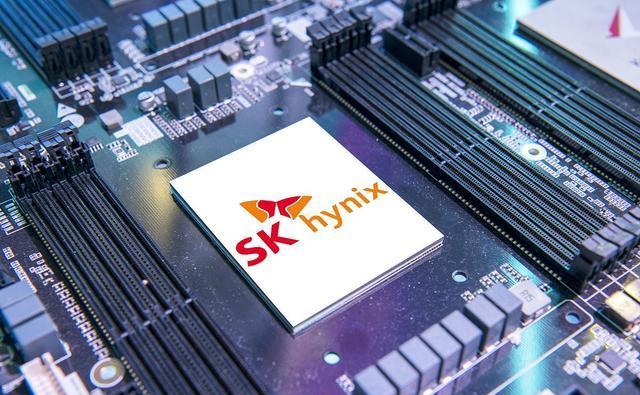
Since the second half of last year, the global DRAM market has continuously experienced a "supply shortage relative to demand" situation, a trend expected to persist through the end of this year, with prices continuing their upward trajectory. Major suppliers Samsung Electronics and SK Hynix recently proposed price increases of 50% to 60% for Q1 server DRAM supplies compared to the previous quarter during negotiations with clients. Despite the significant hike, a sense of urgency remains widespread in the market—many companies are rushing to secure as much inventory as possible before prices climb further. To secure resources, numerous enterprises are diversifying procurement channels, with specialized component trading platforms like IC-Deal becoming a crucial pillar for stabilizing supply chains and aligning with market dynamics.
Recently, business hotels in Banqiao and Pyeongtaek have been fully booked due to frequent visits by U.S. tech giants. Companies such as Google, Microsoft, and Meta are fiercely competing for limited DRAM allocations, even visiting the headquarters of Samsung and SK Hynix in person to negotiate supply arrangements—a phenomenon the industry has dubbed the "DRAM scramble." Compared to over 40 years ago, when Korean chip sales representatives traveled door-to-door across Silicon Valley carrying samples to promote their products, Korea’s semiconductor industry now holds a position of strength. Internally, global tech firms face immense operational pressure if they cannot secure sufficient DRAM, prompting them to prioritize efficient coordination across all supply chain touchpoints.
Industry observers note that while AI-driven demand initially centered on High Bandwidth Memory (HBM), it has now expanded into the server DRAM segment, propelling the semiconductor industry into a new upcycle. As a critical component for temporary data storage in computing systems, DRAM rapidly delivers required data during CPU operations. Although HBM plays a vital role in AI computing performance, its cost and capacity limitations have led tech companies to simultaneously procure large volumes of server DRAM to support increasingly massive data storage requirements.
Price trends reflect the severity of the supply crunch: for example, the average fixed transaction price of DDR4 8GB modules surged from $1.40 in January last year to $9.30 in December—a substantial cumulative increase. According to KB Securities Research Center, driven by rising prices, gross margins for certain mainstream memory products could exceed 70%, with DDR5 potentially achieving higher profitability than HBM3E. The firm also emphasized that semiconductor companies’ financial performance this year will remain heavily dependent on the supply-demand balance of mainstream memory products.
From an industry evolution perspective, Korea’s semiconductor sector has transitioned from "market development" to "supply dominance." Today, global tech firms proactively engage directly with upstream manufacturers to secure critical components and actively leverage third-party procurement platforms to optimize resource allocation. As profit margins for mainstream memory continue to expand, capacity allocation and pricing strategies by Samsung and SK Hynix will further influence downstream customers’ inventory planning and supply chain resilience. In this context, efficient and transparent component procurement channels will become essential for enterprises to navigate market volatility and ensure stable production.
Disclaimer: This article and its accompanying image are intended solely for engineers’ educational purposes. For any copyright infringement or other violations, please contact the site administrator for resolution. (To source more electronic components, visit IC-Deal.)
trending news
Contact Us