


Sorry, no sales person is available right now to take your call. Pls leave a message and we will reply to you via email as soon as possible.
Home/ News/ HCI Hangjing Electronics: Applications of Differential Crystal Oscillators in Various Fields
HCI Hangjing Electronics: Applications of Differential Crystal Oscillators in Various Fields
2026-01-21
I. Applications of Differential Crystal Oscillators in Edge Computing
Differential crystal oscillators play a critical role in edge computing, particularly in scenarios demanding high-performance computing and communication. Their superior performance characteristics make them an indispensable core component in edge computing devices, driving widespread adoption across smart cities, industrial manufacturing, and real-time communication. Key applications include:
High-Speed Data Transmission
Differential crystal oscillators feature low phase noise and high frequency stability, making them essential components for 5G networks, fiber-optic communication, and data centers, providing foundational support for high-speed connectivity between edge computing nodes and the cloud.
High-Precision Clock Synchronization
Edge computing requires multiple devices to operate collaboratively. Differential crystal oscillators deliver highly precise synchronized clock signals, ensuring time consistency across distributed systems.
Enhanced Anti-Interference Capability
The differential signal transmission design of these oscillators effectively reduces external electromagnetic interference, significantly improving the reliability of edge computing devices in complex environments.
AI Computing Acceleration
In edge AI applications, differential crystal oscillators provide accurate clocking for core chips such as GPUs and FPGAs, enhancing real-time inference and computational performance.
Industrial Edge Scenarios
They are well-suited for Industrial IoT devices, offering high reliability and shock resistance to ensure continuous and stable operation of industrial edge nodes.
★ Common Frequency Points Overview
In edge computing devices, differential crystal oscillators improve system stability and transmission efficiency by delivering high-frequency, low-phase-noise clock signals, making them one of the core components for high-performance edge computing.
Common frequency points and their application descriptions are as follows:
25 MHz / 27 MHz: Commonly used in network switches, routers, and communication equipment related to edge computing.
100 MHz / 125 MHz: Supports high-speed data transmission, suitable for edge servers and storage devices.
156.25 MHz: Used in high-performance networking equipment for optical modules and data center applications, meeting the high-speed communication demands of edge computing.
200 MHz and above: Designed for ultra-high-performance computing devices, ideal for AI edge computing and real-time data processing scenarios.
Reference Series Datasheets
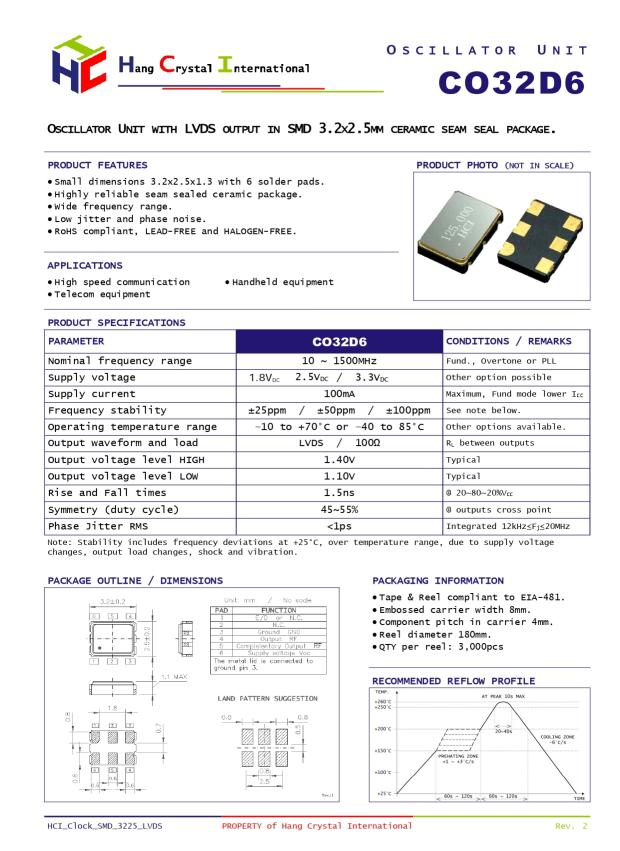
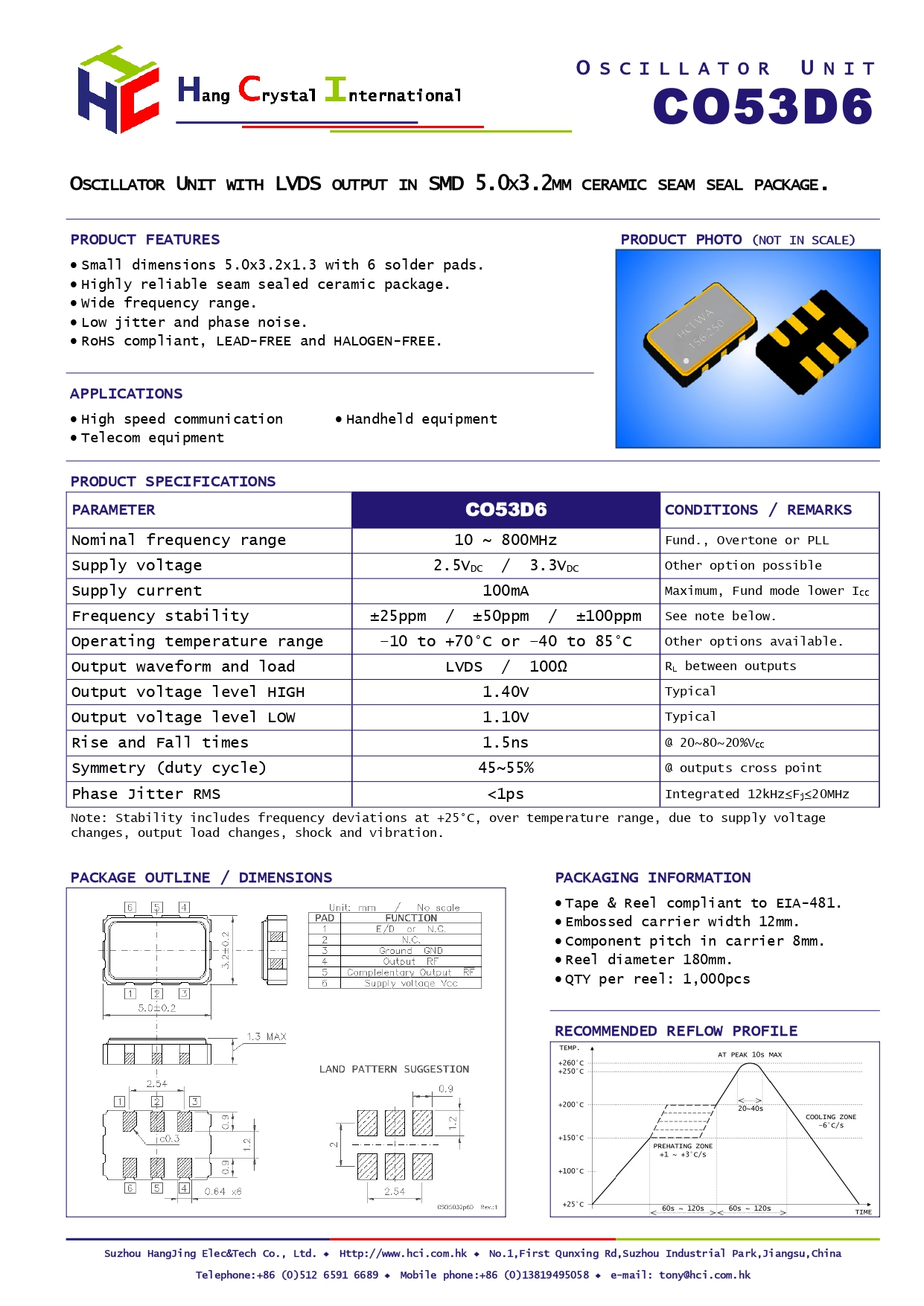
II. Applications and Key Technical Insights of Differential Crystal Oscillators in Optical Communication Modules
1. Typical Applications in Optical Modules
High-Speed SerDes Clock Source
Application Scenario: Provides reference clocking for PAM4 modulators and CDR circuits.
Example Specifications: 100G/400G optical modules commonly use 156.25 MHz or 312.500 MHz differential crystal oscillators with jitter performance <50 fs RMS (integrated bandwidth 12 kHz–20 MHz).
Multi-Channel Synchronization
Application Scenario: In multi-channel optical modules such as CFP2/QSFP-DD, differential clock trees enable phase synchronization across multiple signal paths.
Key Technology: Multi-output differential oscillators (e.g., 4-channel LVDS) can reduce clock skew to within ±50 ps.
Temperature Compensation Solutions
Differential TCXOs (Temperature-Compensated Crystal Oscillators): Equipped with built-in temperature sensors and compensation algorithms, they achieve frequency deviation ≤±2.5 ppm over the full operating temperature range in optical modules.
2. Industry Trends and Selection Guidelines
Technology Trends
Higher Frequencies: Differential oscillators supporting 224 GHz frequencies have entered mass production, aligning with 1.6T optical module requirements.
Miniaturization: 2520 packages (2.5×2.5 mm) are gradually replacing 5032/7050 sizes to meet the compact layout demands of CPO (Co-Packaged Optics).
Integration: Differential oscillators with built-in power supply filters and spread-spectrum functionality further simplify circuit design.
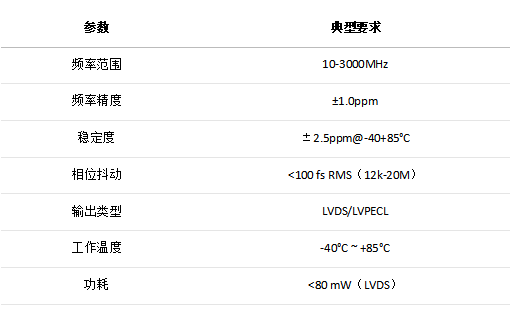
★ Key Selection Criteria (Industrial Grade)
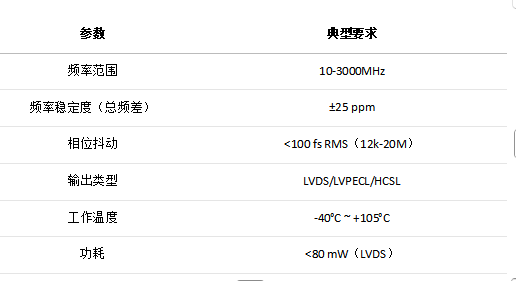
★ Key Selection Criteria (High-Stability, High-Precision Requirements)
Differential TCXOs (LVDS/LVPECL)—Hangjing’s TC32D6/TC32P6/TC53H8 series meet customers’ stringent requirements for high stability and precision.
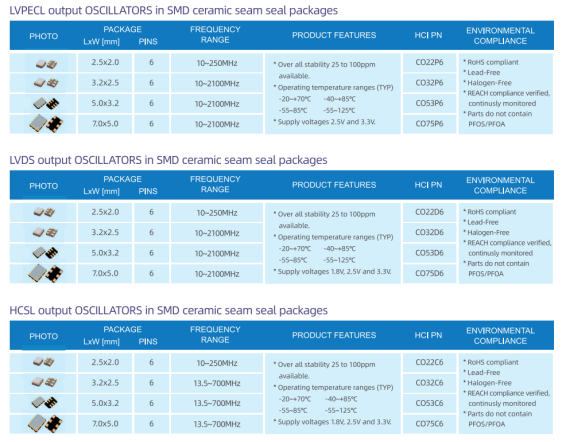
# Hangjing Differential Oscillator Series Reference
Hangjing offers differential crystal oscillators ranging from 10 MHz to 2000 MHz with high stability and low jitter, catering to diverse customer applications across various fields.
trending news
Contact Us