



Sorry, no sales person is available right now to take your call. Pls leave a message and we will reply to you via email as soon as possible.
Home/ News/ US Commerce Secretary exposes inside story of TSMC’s US$100 billion additional investment in US, saying more is to come
US Commerce Secretary exposes inside story of TSMC’s US$100 billion additional investment in US, saying more is to come
2026-01-15
The global semiconductor industry is undergoing profound geopolitical realignment. Recently, U.S. Commerce Secretary Lutnick revealed in a public interview that TSMC’s total investment in the United States could expand further, with his personal estimate suggesting the final amount will exceed $200 billion. This figure, far surpassing previous projections, not only signifies an accelerated concentration of the world's most advanced wafer fabrication capabilities within the U.S., but also heralds a new round of adjustments across the entire supply chain—from equipment and materials to downstream chip supply.
Looking back at this trajectory, TSMC announced in March 2025 an additional $100 billion investment in the U.S., on top of its previously planned $65 billion project for three Arizona-based fabs, bringing its total committed investment to $165 billion—an amount already supported by corresponding funding from the U.S. Department of Commerce. In the interview, Lutnick further disclosed negotiation details, noting that the U.S. side had raised concerns about discrepancies between TSMC’s engineering team diversity and local DEI (Diversity, Equity, and Inclusion) requirements. Ultimately, both parties reached an agreement: TSMC secured exemptions from certain DEI provisions in exchange for its commitment to substantially increase its investment, thereby facilitating smooth project implementation and scale-up.
This extraordinary investment move extends far beyond the scope of a single company or project, profoundly reshaping the strategic landscape of the global semiconductor industry. First, it marks a significant milestone in the U.S. effort to attract advanced manufacturing "reshoring," substantially enhancing future autonomy in high-end logic chip production and supply chain security. Second, for TSMC itself, such a massive overseas investment represents a critical step in its global operations—but it also introduces long-term challenges related to cost control, cultural integration, and building localized supply chains.
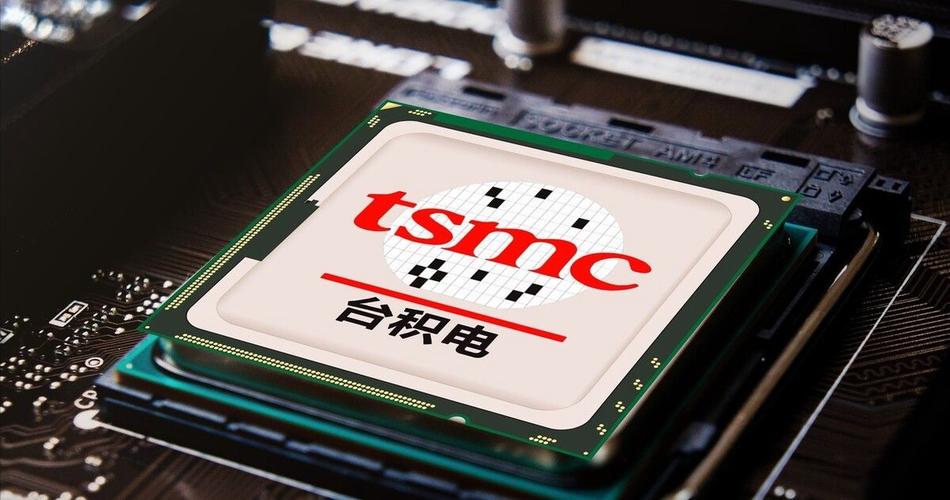
More importantly, the relocation of manufacturing capacity at the apex of the industry pyramid will inevitably create a "ripple effect," cascading down to countless downstream design firms and end customers. As advanced-process capacity gradually comes online in the U.S. over the next few years, the geographic distribution of global chip supply will become increasingly diversified. This compels all technology companies reliant on high-end chips to reassess their supply chain strategies and proactively position themselves regarding capacity allocation, logistics costs, geopolitical risks, and supplier relationship management.
In this context, supply chain resilience and agility have become paramount. For tens of thousands of small and medium-sized electronics manufacturers and R&D teams, direct engagement with original component manufacturers or industry giants often presents high barriers. Instead, they require an efficient, reliable, and resource-integrated intermediary platform to navigate a market characterized by rapid technological iteration and frequent supply volatility. This is precisely where specialized component trading platforms like IC-Deal deliver core value. By aggregating global supplier resources, IC-Deal offers end-to-end services—from industry trend insights and component selection to real-time price comparison and guaranteed delivery—enabling businesses to accurately match demand, secure supply resources, and effectively manage procurement costs and risks amid complex industry shifts, thus allowing them to focus their energy on product innovation and market expansion.
Lutnick hinted that TSMC might independently announce an even higher investment figure, indicating that the narrative of U.S. domestic chip manufacturing expansion is far from complete. As the industrial ecosystem continues to evolve, both large enterprises and SMEs must proactively build more resilient supply chains and deepen collaboration with trusted partners—a necessity for ensuring business continuity and competitiveness. It is foreseeable that, throughout this ongoing geographic restructuring of chip manufacturing, platforms capable of delivering stable, transparent, and efficient supply chain services will see their connective value and industrial support role grow ever more prominent.
Disclaimer: This article and its accompanying image are intended solely for engineers’ reference. For any copyright infringement or other violations, please contact the site administrator. (To source more electronic components, visit IC-Deal.)
Previous Article: SanDisk Enterprise-class NAND will increase in price by 100%!
trending news
Contact Us