


Sorry, no sales person is available right now to take your call. Pls leave a message and we will reply to you via email as soon as possible.
Home/ News/ Micron invests $200 billion, as SK Hynix and Samsung ramp up investments in response to the AI-driven supercycle.
Micron invests $200 billion, as SK Hynix and Samsung ramp up investments in response to the AI-driven supercycle.
2026-03-10
Micron Technology stated that it can currently meet only 50% to two-thirds of key customers' demand. According to KB Securities data, the fulfillment rate for major clients' memory chip demand will remain around 60% through February 2026, with a server DRAM supply gap below 50%. Since September 2025, DDR5 chip prices have surged by nearly 500%, and shortages have spread from high-end HBM to the entire memory market. Citigroup forecasts that DRAM and NAND flash memory demand growth in 2026 will reach 20.1% and 21.4%, respectively—both exceeding supply growth rates of 17.5% and 16.5%. The market widely expects the supply shortage to persist until 2027.
Driven by broad-based price increases, earnings expectations for memory giants continue to rise. Micron expects its gross margin this quarter to reach 68%, approaching NVIDIA's profitability levels. SK Hynix’s chairman revealed that analysts’ average forecast for 2026 operating profit has risen from $50 billion at the end of last year to $70 billion, with some institutions projecting figures exceeding $100 billion. Bernstein Research estimates that DRAM gross margins could hit a record high of 77% in Q4 2026.
In response to surging demand, the three major memory manufacturers have simultaneously launched the largest capacity expansion in history. Micron announced a total investment of $200 billion in the U.S., including $50 billion to expand its headquarters campus in Idaho by building two new wafer fabs—the first expected to begin DRAM mass production by mid-2027, with full ramp-up scheduled for the end of 2028. Additionally, Micron is initiating a $100 billion wafer fab campus in Syracuse, New York, and finalized a $9.6 billion factory plan in Hiroshima, Japan, in late 2025.
SK Hynix has moved forward the trial run of its Yongin Phase 1 fab from the originally planned May 2027 to February–March 2026; this facility is six times the size of its Cheongju M15X fab. Its new M15X fab in Cheongju, with an investment exceeding ₩20 trillion, has already begun trial operations, starting with an initial monthly capacity of approximately 10,000 wafers, which will scale up to 55,000–60,000 wafers per month by the end of 2026. Samsung Electronics plans to increase HBM4-capable 1c DRAM capacity by about 170% in 2026, constructing a new DRAM production line at its Pyeongtaek P4 facility, aiming for a monthly capacity of 100,000–120,000 wafers by Q1 2027. In NAND, Samsung intends to expand production of its ninth-generation V9 NAND on the Xi’an X2 line in Q2 2026, boosting monthly capacity by 40,000–50,000 wafers. Meanwhile, SK Hynix will achieve a monthly capacity of approximately 30,000 wafers for its ninth-generation 321-layer NAND at its Cheongju M15 fab during the same period.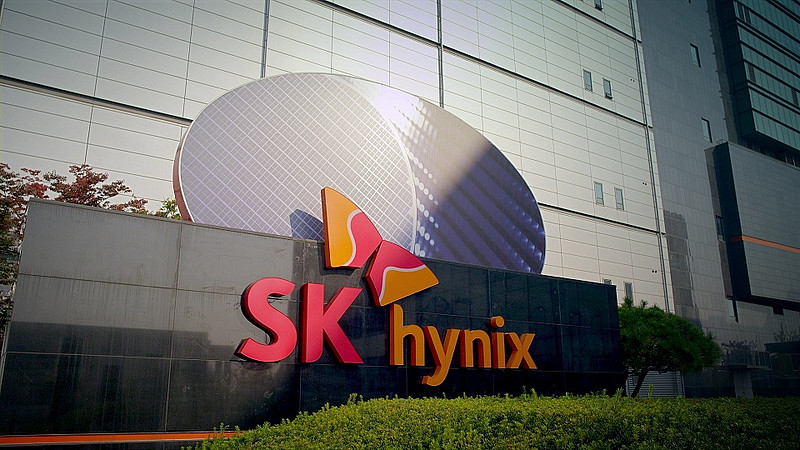
From a pricing perspective, the latest quoted price for HBM4 is around $700—20% to 30% higher than HBM3E and nearly 30% above August 2025 levels. SK Hynix holds a dominant ~60% share in the HBM market, powering NVIDIA’s AI accelerators, with its entire 2026 capacity already sold out and DRAM and NAND inventory levels down to just about four weeks. Samsung Electronics, leveraging its early-mover advantage in mass-producing HBM4, is expected to capture roughly 30% of the global HBM market this year.
Despite unprecedented expansion efforts, newly added capacity cannot quickly close the gap. A Micron vice president admitted, “We’ve never seen such a disruptive demand surge.” Incremental supply in 2026 will primarily come from upgrades to existing technologies, resulting in extremely limited supply growth; meaningful output from newly built fabs won’t materialize until after 2028. SK Hynix’s chairman warned that rapid technological shifts could “easily turn into a $100 billion loss.” Bernstein Research noted that even if prices normalize in 2027, DRAM gross margins are still expected to remain elevated at around 62%, while HBM bit shipments are projected to grow by 100% in 2026 and another 35% in 2027.
Disclaimer: This article and its accompanying images are intended solely for engineers’ reference. For any copyright infringement or other violations, please contact the site administrator. (To learn more about electronic components and procurement, visit ICkey.)
Previous Article: YSN8025TS: High-Precision RTC Timing Solution for Photovoltaic Inverters
trending news
Contact Us